
 English
 Español
 Portugues
 Pусский
 Deutsch
 日本語
日本語 한국어
한국어 العربية
 Italiano
 Nederlands
 Polski
 ไทย
ไทย Türk dili
 हिन्दी
 Indonesia
 Melayu
 Tiếng Việt
 čeština
 Română
Rocket attitude control valves
Rocket attitude control valves are critical components in spacecraft and launch vehicle propulsion systems. Their primary function is to regulate the flow of propellant to attitude control thrusters, enabling precise adjustment of a rocket’s orientation in space. By controlling the opening, closing, and sometimes throttling of propellant passages, these valves help maintain stability, correct trajectory deviations, and execute maneuvers such as pitch, yaw, and roll control.In a rocket, attitude control is essential because even small disturbances can cause the vehicle to drift from its intended path. During launch, atmospheric forces, vibration, and engine asymmetry can all affect stability. After reaching space, the absence of aerodynamic control surfaces means that attitude control must rely on thrusters and the valves that feed them. These valves act as the interface between the propellant supply and the control thrusters, responding to commands from the guidance, navigation, and control system.Attitude control valves are designed to operate under extreme conditions. They must withstand wide temperature ranges, high pressure, intense vibration, rapid acceleration, and exposure to reactive propellants. Reliability is especially important because failure of a single valve can compromise mission success. As a result, these valves are engineered with strict attention to sealing performance, response time, material compatibility, and long service life.Several design requirements are particularly important. First, the valve must provide fast and accurate response so that the thruster can produce corrective force at the right moment. Second, it must minimize leakage to avoid wasting propellant and to prevent unintended thrust. Third, it must function consistently after long periods of storage and in vacuum environments. Depending on the system, valves may be solenoid-actuated, pyro-driven, or mechanically operated, each offering different advantages in terms of speed, power consumption, and reliability.Materials used in these valves are selected for strength, corrosion resistance, and compatibility with propellants such as hydrazine, nitrogen tetroxide, or gaseous fluids. Internal components often require special surface treatments to reduce wear and friction. In some systems, redundancy is built in so that if one valve or path fails, another can maintain control authority.Testing and qualification of attitude control valves are extensive. They typically undergo thermal cycling, vibration testing, pressure endurance tests, leakage checks, and repeated actuation cycles. These tests simulate the harsh conditions of launch and space operation. Engineers also analyze valve dynamics to ensure they open and close within the required time limits and do not introduce instability into the control system.In modern spacecraft, attitude control valves contribute not only to launch safety but also to orbital insertion, station keeping, docking, and reentry support. Their role may seem small compared with the main engine, but they are indispensable for precise control. Without dependable attitude control valves, a rocket would be far less capable of maintaining orientation and completing its mission successfully.
Produit
Catégorie:
-
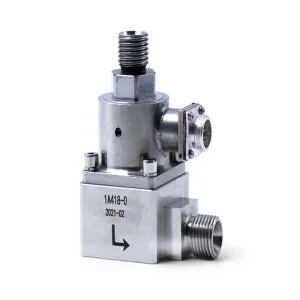
High pressure solenoid valves for rocket attitude control systems
Leur classification: Solenoid ValveVues: 854Numéro:Temps de libération: 2026-10-23 15:39:39Nominal diameter: DN6
Operating voltage: DC27V±3V
Connection type: M14*1.5 external thread
Actualités
Catégorie:
Aucun résultat de recherche!
Affaire
Catégorie:
Aucun résultat de recherche!
Vidéo
Catégorie:
Aucun résultat de recherche!
Téléchargement
Catégorie:
Aucun résultat de recherche!
Recrutement
Catégorie:
Aucun résultat de recherche!
Produits recommandés
-
NEWS
High pressure solenoid valves for rocket attitude control systems
En savoir plus



 WhatsApp
 Téléphone